
Space Optimization Master for Warehousing and Logistics
Jun 23,2025

In warehousing and logistics, a reasonable palletizing method is crucial for making full use of warehouse space and improving the efficiency of goods storage and handling. Traditional manual palletizing methods not only involve high labor intensity but also the quality and efficiency of palletizing are greatly affected by human factors. With the rapid development of the logistics industry, the flow and types of goods are constantly increasing, placing higher demands on palletizing work, thus giving rise to robotic palletizing systems.
Robotic palletizing systems mainly consist of robots, conveyors, control systems, and pallets. The robot is the core execution unit of the palletizing operation. Common types include Cartesian robots and articulated robots. Cartesian robots are characterized by their simple structure and high positioning accuracy. They can move precisely in the X, Y, and Z directions, quickly and accurately grasping goods and placing them on pallets. Articulated robots have higher flexibility, capable of simulating human arm movements to complete palletizing tasks in complex spatial environments, especially suitable for scenarios with special requirements for palletizing shapes and layouts.
The conveyor is responsible for orderly transporting goods to the robot's grasping position, ensuring the continuity of the palletizing work. The speed and conveying capacity of the conveyor can be adjusted according to actual needs to match the palletizing speed of the robot. The control system is the "command center" of the entire palletizing system. It is responsible for coordinating the work of various parts such as the robot and conveyor. Through preset programs and algorithms, the control system can accurately plan the robot's movement trajectory and palletizing sequence based on information such as the size, weight, shape of the goods, and the specifications of the pallet, achieving efficient and stable palletizing operations. At the same time, the control system also has real-time monitoring and fault diagnosis functions, capable of promptly detecting abnormal situations during system operation and taking corresponding measures to handle them, ensuring the normal operation of the system.
In practical applications, robotic palletizing systems have demonstrated many advantages. First, it greatly improves palletizing efficiency. Robots can work continuously 24 hours a day, and their palletizing speed far exceeds that of manual labor. Generally, a robotic palletizing system can complete hundreds or even thousands of palletizing actions per hour, several times the efficiency of manual palletizing. This allows goods to be palletized and enter storage or transportation links faster, improving the speed of the entire logistics operation. Second, robotic palletizing has high precision, ensuring the neatness and stability of goods placement. Through precise motion control, the robot can accurately place goods in the designated position on the pallet, avoiding problems such as tilting and collapse that may occur during manual palletizing, reducing the risk of damage to goods during storage and handling. In addition, the robotic palletizing system has strong flexibility. It can quickly adjust palletizing modes and parameters according to the characteristics and requirements of different goods, adapting to various specifications of goods and pallets. Whether it is standard carton packaged goods or irregularly shaped goods, the robotic palletizing system can handle them with ease.
Taking large e-commerce warehouses as an example, a large number of goods need to be palletized and stored every day. After introducing a robotic palletizing system, the warehouse's palletizing efficiency is greatly improved, capable of handling a large number of goods in a short time, meeting the needs of the rapid development of e-commerce business. At the same time, due to the precision of robotic palletizing, the space utilization rate of the warehouse has been significantly improved. Through reasonable palletizing layout, the same area of warehouse can store more goods, reducing warehousing costs. In the raw material warehouses of the manufacturing industry, robotic palletizing systems also play an important role. It can quickly and accurately palletize various raw materials, providing timely and stable material supply for the production line, ensuring the continuity of production.
With continuous technological advancements, robotic palletizing systems are constantly being upgraded. In the future, robotic palletizing systems will become more intelligent, capable of automatically adjusting palletizing strategies through sensors that perceive the status of goods and environmental changes in real time; at the same time, their collaborative operation capabilities with other warehousing and logistics equipment will be further enhanced, providing stronger support for the intelligent and efficient development of the warehousing and logistics industry.
Latest News
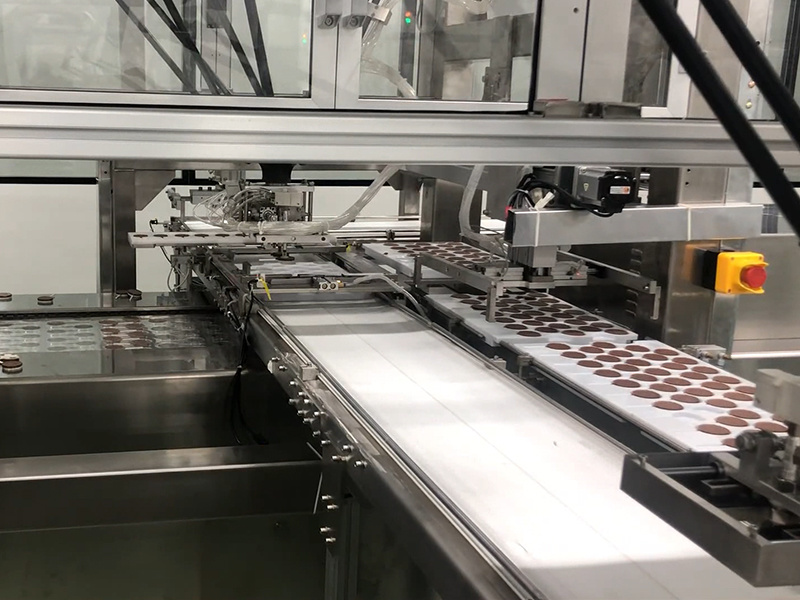
Robot sorting system: a new efficiency engine for the logistics industry
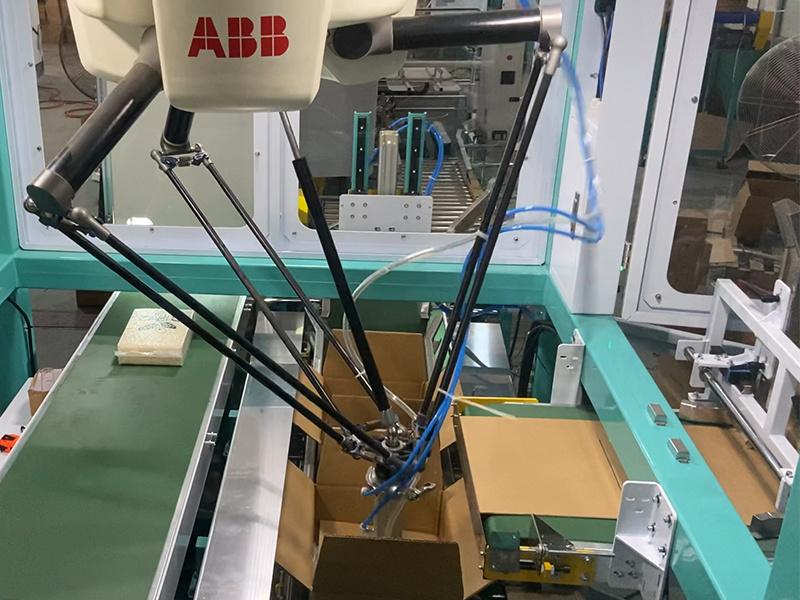
High-efficiency packaging assistant for industrial production
Leave us a message
We will contact you within one business day. Please check your email.
Quick Links
Contact Information
Telephone:0757-81260223
Telephone: 18666362425 (Mr. Zhang)
Telephone: 13927715024 (Ms. Tang)
Email: xinhan-robot@outlook.com
Address: Building 7, Floor 1, Area C,
Xinguangyuan Industrial Base, Luocun,
Nanhai District, Foshan City, Guangdong
Province


