
A New Chapter in Intelligent Manufacturing: The Key Role of Robot Loading and Unloading Systems
Jun 23,2025
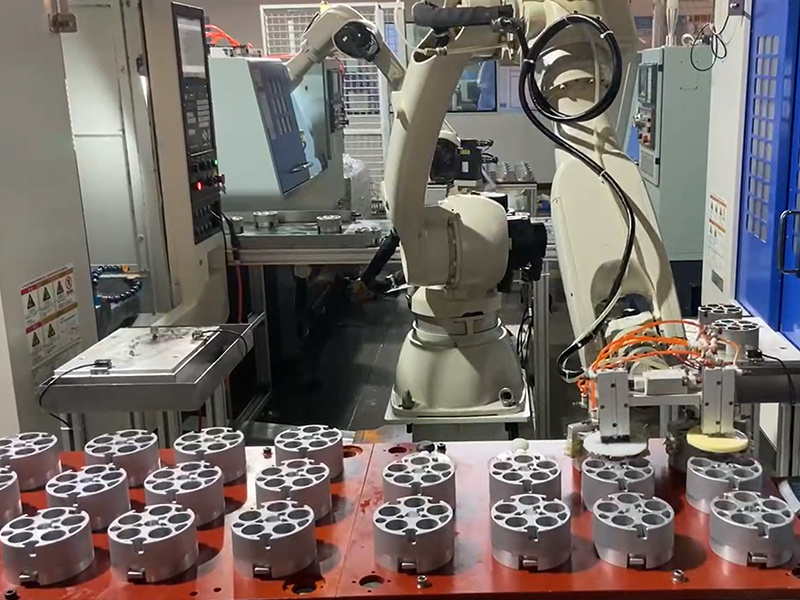
In the manufacturing industry's production process, the loading and unloading process, as a key step in production preparation, directly affects the overall production progress in terms of efficiency and accuracy. Traditional manual loading and unloading methods are not only limited by the workers' physical strength and working hours, making it difficult to meet the needs of long-term, high-intensity production, but also have large fluctuations in operational accuracy, easily leading to product quality problems due to human error. With the development of industrial automation, robotic loading and unloading systems have emerged and gradually become the "standard configuration" on manufacturing production lines.
Robotic loading and unloading systems consist of core components such as the robot body, control system, visual recognition system, and material handling device. The robot body usually uses a multi-joint robotic arm, with flexible movement capabilities and strong load-bearing capacity, enabling it to quickly and accurately grasp and place materials in complex production environments. For example, in an automobile parts processing workshop, a large six-axis robot can easily lift engine blocks weighing tens of kilograms and accurately place them on the worktable of the processing equipment, with a repeat positioning accuracy of ±0.05 mm, ensuring the accuracy of the processing position.
The control system, as the "nerve center" of the robotic loading and unloading system, precisely controls the robot's movement trajectory and action sequence through preset programs and algorithms. At the same time, it can also communicate in real-time with the control system of the production equipment, coordinating the robot's loading and unloading rhythm according to the equipment's processing progress and material needs. When the processing equipment completes the processing of a workpiece, the control system immediately instructs the robot to perform the unloading operation and sends new materials to the processing table, achieving seamless connection in the production process, greatly reducing equipment idle time, and improving production efficiency.
The visual recognition system gives the robot "eyes", enabling it to accurately identify the position, posture, and shape of the material. Through high-definition cameras installed at key positions on the production line and advanced image recognition algorithms, the robot can quickly locate the target material during the material handling process and calculate the optimal grasping path. In the production of electronic components, due to the small size and varied shapes of the components, the requirements for grasping accuracy are extremely high. The visual recognition system can identify micron-level size differences, guiding the robot to grasp accurately and preventing component damage due to grasping deviations.
The material handling device is responsible for orderly transporting materials within the robot's working range. Common ones include belt conveyors, chain conveyors, and AGVs (Automated Guided Vehicles). These conveying devices work closely with the robot, achieving continuous and stable material supply according to the production rhythm and material needs. In the production workshops of some large-scale mechanical manufacturing enterprises, AGV vehicles will automatically transport raw materials to the robot loading and unloading workstation according to preset routes. After the robot completes the loading and unloading operations, the AGV transports the processed workpieces to the next process, the entire process requires no manual intervention, realizing the full automation of material transportation and loading and unloading.
In practical applications, the benefits brought by robotic loading and unloading systems are very significant. In the hardware processing industry, after introducing robotic loading and unloading systems, the daily output of a single piece of equipment has increased by more than 50%, and the product qualification rate has increased from the original 85% to 98%. At the same time, because robots can work 24 hours a day without interruption, enterprises can fully utilize the production capacity of equipment, effectively reducing the unit production cost. In high-risk operating environments, such as high-temperature casting workshops and toxic chemical production workshops, robotic loading and unloading systems play an irreplaceable role. It avoids workers from directly contacting dangerous environments, greatly ensuring employee safety, and reducing enterprise safety risks.
With the continuous integration of new technologies such as artificial intelligence and 5G, robotic loading and unloading systems will develop in a more intelligent and flexible direction in the future. For example, with the help of artificial intelligence technology, robots can achieve autonomous learning and decision-making, automatically optimizing loading and unloading strategies according to different materials and processing technologies; the application of 5G technology can achieve real-time, high-speed communication between robots and production systems, further improving the system's response speed and collaborative capabilities. Robotic loading and unloading systems will play an even more important role in the intelligent upgrading of the manufacturing industry, driving the industry towards higher quality and higher efficiency.
Latest News
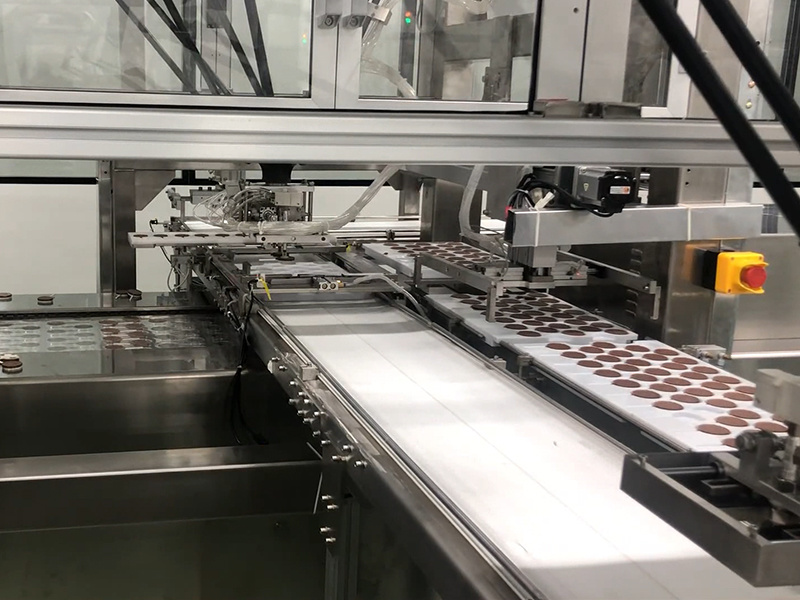
Robot sorting system: a new efficiency engine for the logistics industry
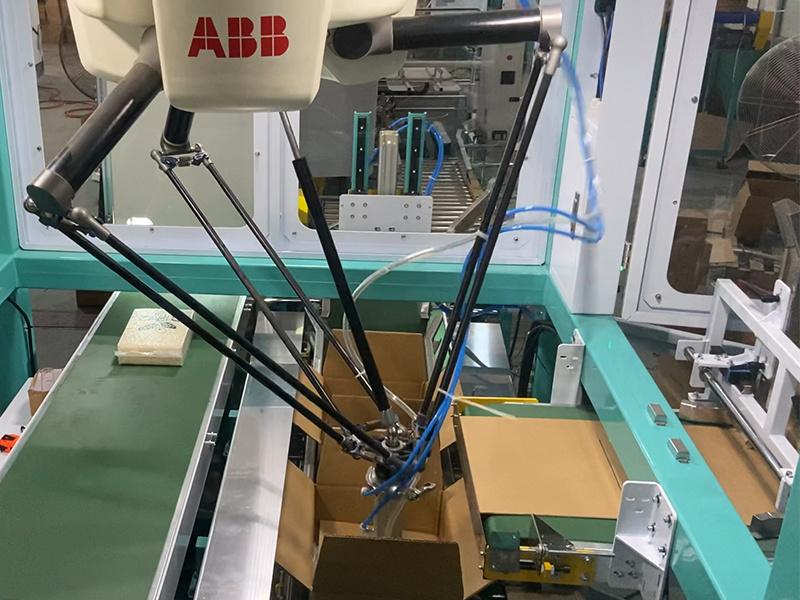
High-efficiency packaging assistant for industrial production
Leave us a message
We will contact you within one business day. Please check your email.
Quick Links
Contact Information
Telephone:0757-81260223
Telephone: 18666362425 (Mr. Zhang)
Telephone: 13927715024 (Ms. Tang)
Email: xinhan-robot@outlook.com
Address: Building 7, Floor 1, Area C,
Xinguangyuan Industrial Base, Luocun,
Nanhai District, Foshan City, Guangdong
Province


