
Usheering in a new era of high-purity water purification
Jun 23,2025

Reverse Osmosis (RO) technology is widely recognized as one of the most efficient water purification technologies. Its core lies in the RO membrane's ability to effectively intercept almost all contaminants in water, such as impurities, ions, bacteria, and viruses, through its extremely small pores, thereby producing highly purified water. RO membrane production equipment is the unsung hero behind this remarkable technology.
The manufacturing process of RO membrane production equipment is complex and precise. It begins with membrane material preparation. Commonly used RO membrane materials, such as polyamide and cellulose acetate, require rigorous synthesis and processing. Taking polyamide as an example, a specific polymerization reaction is used, precisely controlling reaction conditions such as temperature, pressure, and reaction time to synthesize a polyamide polymer with specific molecular structure and properties. The molecular structure and properties of these polymers directly affect the separation performance of the RO membrane, such as salt rejection rate and water flux.
In the membrane forming stage, RO membrane production equipment employs various advanced forming techniques, with phase inversion being a common one. In the phase inversion process, the prepared membrane material solution is uniformly coated onto a specific support, and then, by controlling environmental conditions such as temperature, humidity, and solvent evaporation rate, the membrane material solution undergoes a phase transition, changing from a homogeneous solution to a solid-state membrane with a specific microstructure. This microstructure includes the membrane's skin layer, transition layer, and support layer. The skin layer has extremely small pores, which is key to high-precision filtration, while the transition and support layers support and stabilize the skin layer, ensuring the mechanical strength and stability of the RO membrane during use.
RO membrane production equipment is also equipped with advanced detection and control systems to ensure that the produced RO membranes are consistently high-quality. During production, various performance indicators of the membrane are monitored in real-time, such as pore size distribution, salt rejection rate, and water flux. High-precision testing instruments accurately measure the membrane's pore size, ensuring that the pore size is uniform and meets design requirements, as even minor differences in pore size can significantly affect the RO membrane's filtration performance. For salt rejection rate and water flux testing, a testing device simulating actual use conditions is used to rigorously test the produced RO membranes. Only membranes that meet all performance indicators proceed to the next stage or are released to the market.
RO membranes produced by RO membrane production equipment are widely used in various fields. In drinking water purification, RO membranes effectively remove heavy metal ions such as lead, mercury, and cadmium from water. These heavy metal ions are extremely harmful to human health, and long-term consumption of water containing heavy metals can lead to various diseases. RO membranes also remove bacteria, viruses, and organic pollutants such as pesticide residues and antibiotics, providing people with safe and pure drinking water. In the electronics industry, the manufacturing of chips and semiconductors requires extremely high water quality, as even tiny impurities and ions in water can affect the performance and quality of electronic products. RO membranes, with their superior filtration performance, can provide ultrapure water for the electronics industry, meeting its stringent water quality requirements. In the pharmaceutical industry, RO membranes are used to prepare injection water and purified water, ensuring water safety during drug production and compliance with strict pharmaceutical production quality management regulations.
With continuous technological advancements, RO membrane production equipment is constantly innovating. On one hand, by improving production processes and equipment structure, production efficiency is increased, and production costs are reduced, making RO membrane products more competitive in the market. For example, new automated coating equipment can more uniformly and quickly coat the membrane material solution onto the support, shortening the production cycle. On the other hand, research and development investment in new membrane materials and structures is increased to improve RO membrane performance. Researchers are exploring the development of RO membranes with higher water flux, stronger anti-fouling capabilities, and longer service life. For example, by introducing special functional groups into the membrane material, the hydrophilicity of the membrane is improved, reducing the adsorption of pollutants on the membrane surface, thereby extending the service life of the RO membrane and reducing operating costs. In the future, RO membrane production equipment will continue to lead the development of water purification technology, creating a better and healthier water environment for people.
Latest News
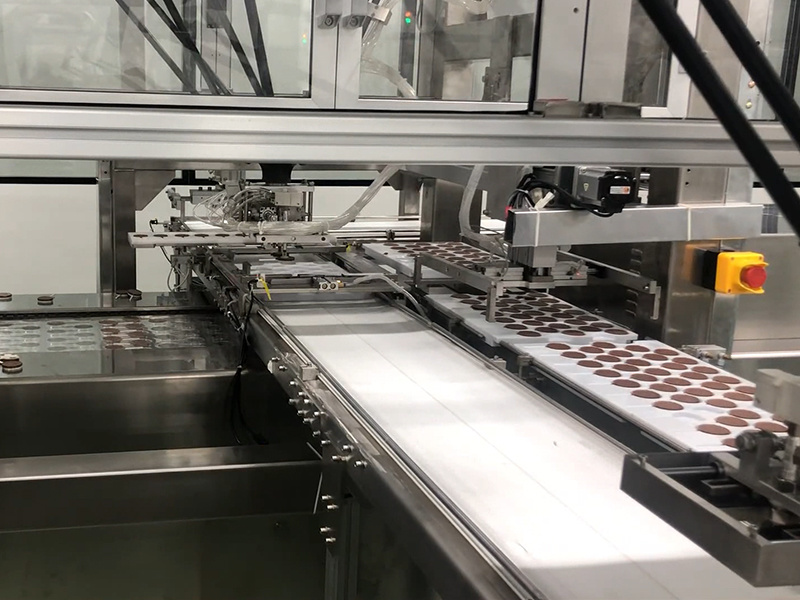
Robot sorting system: a new efficiency engine for the logistics industry
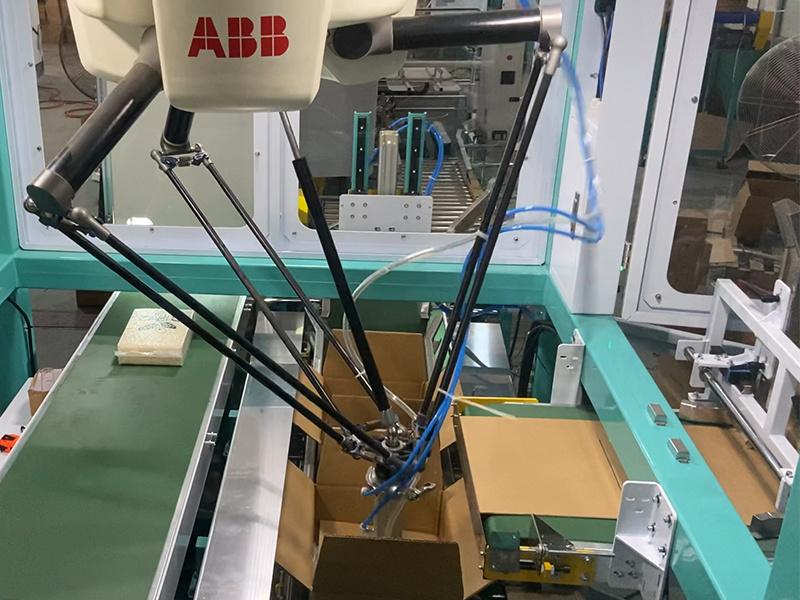
High-efficiency packaging assistant for industrial production
Leave us a message
We will contact you within one business day. Please check your email.
Quick Links
Contact Information
Telephone:0757-81260223
Telephone: 18666362425 (Mr. Zhang)
Telephone: 13927715024 (Ms. Tang)
Email: xinhan-robot@outlook.com
Address: Building 7, Floor 1, Area C,
Xinguangyuan Industrial Base, Luocun,
Nanhai District, Foshan City, Guangdong
Province


