
Exploring filter cartridge production equipment: Multiple lines of defense to ensure water safety
Jun 23,2025
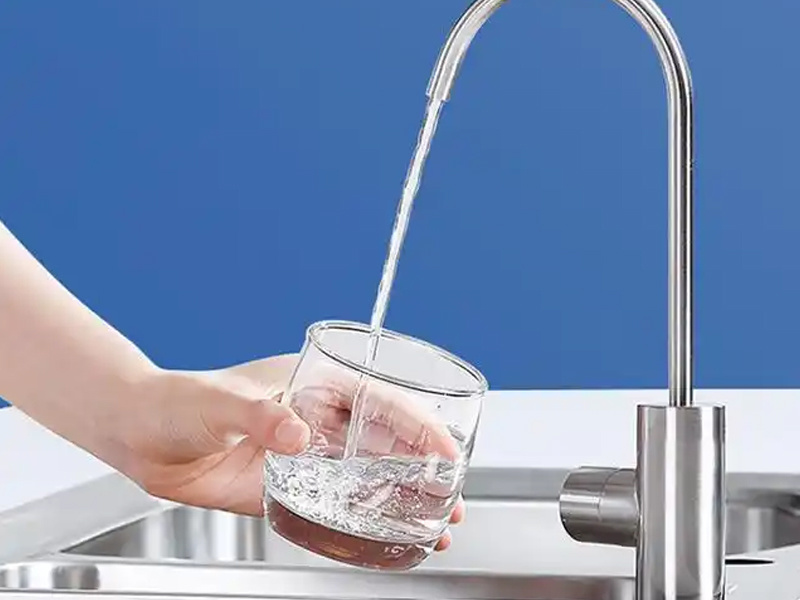
There are many types of filter cartridges, including PP cotton filter cartridges, activated carbon filter cartridges, and ceramic filter cartridges. Different types of filter cartridges have different filtration functions and applicable scenarios, and filter cartridge production equipment also uses a variety of production technologies and processes for the characteristics of various filter cartridges.
Taking PP cotton filter cartridges as an example, their production equipment mainly uses melt-blown technology. First, polypropylene granular raw materials are put into a high-temperature furnace. Under high-temperature conditions, the polypropylene granules melt into a viscous fluid. Then, the molten polypropylene is sprayed from the spinneret by high-speed and high-pressure airflow to form extremely fine fibers. These fibers rapidly cool and solidify in the air and randomly interweave to form a PP cotton filter cartridge with a certain pore structure. In this process, the production equipment needs to precisely control parameters such as furnace temperature, airflow speed, and spinneret size. Too high a furnace temperature will cause the polypropylene to decompose, affecting the quality of the filter cartridge; too low a temperature will prevent the polypropylene from melting sufficiently, resulting in uneven fiber thickness. The airflow speed and spinneret size directly affect the diameter of the fibers and the porosity of the filter cartridge, thus determining the filtration accuracy and water flux of the filter cartridge. After production, the equipment will also wind and cut the PP cotton filter cartridge to achieve the specified size and shape.
The production equipment for activated carbon filter cartridges has different process flows. In addition to the mixing process similar to carbon rod production, where activated carbon and binder are thoroughly mixed, the filter cartridge production equipment also needs to use special molds to press the mixed raw materials into filter cartridges of a specific shape. During the pressing process, precise control of pressure and holding time is crucial. Appropriate pressure can make the activated carbon particles tightly bound, ensuring the strength of the filter cartridge; insufficient holding time will result in a loose filter cartridge structure, affecting the filtration effect. After pressing, the activated carbon filter cartridge also needs to undergo high-temperature sintering and other processing processes to further improve the stability and adsorption performance of the filter cartridge. The equipment will strictly control the temperature curve during the sintering process, slowly heating, maintaining temperature, and cooling down to avoid problems such as cracking of the filter cartridge due to rapid temperature changes.
Ceramic filter cartridge production equipment uses the forming and firing process of ceramic materials. First, natural diatomaceous earth, kaolin, and other ceramic raw materials are crushed and screened to remove impurities and ensure the uniformity of the raw material particles. Then, by adding a binder and an appropriate amount of water, the raw materials are made into a clay material with good plasticity. The clay material is processed by a vacuum kneading machine to remove internal air and improve the density of the clay material. Next, the clay material is pressed into a filter cartridge blank using a mold, or a filter cartridge with a specific shape is made by extrusion molding. The formed filter cartridge blank needs to go through a drying and high-temperature firing process. During the drying process, the equipment must control the temperature and humidity of the drying environment to prevent the filter cartridge blank from cracking due to rapid drying; during high-temperature firing, the temperature usually reaches over 1000℃. In this process, the ceramic raw materials undergo physical and chemical changes, forming a hard, porous ceramic filter cartridge structure. After firing, the equipment will also perform surface treatments such as grinding and polishing on the ceramic filter cartridge, as well as quality inspection procedures such as sealing tests.
Various filter cartridges produced by filter cartridge production equipment are widely used in different water purification processes such as pre-filtration and terminal filtration. Pre-filters can effectively intercept large particulate impurities such as sand and rust in the water, protecting subsequent precision filtration components; terminal filters are responsible for further removing harmful substances such as residual chlorine, organic matter, and bacteria in the water, ensuring that the effluent meets drinking water standards. With the continuous development of the water purification market, filter cartridge production equipment is also constantly innovating. In the future, it will pay more attention to the efficiency of production, the environmental protection of products, and compatibility with intelligent water purification systems to provide consumers with higher-quality and more reliable filter cartridge products, safeguarding people's drinking water health.
Latest News
Robot sorting system: a new efficiency engine for the logistics industry
High-efficiency packaging assistant for industrial production
Leave us a message
We will contact you within one business day. Please check your email.
Quick Links
Contact Information
Telephone:0757-81260223
Telephone: 18666362425 (Mr. Zhang)
Telephone: 13927715024 (Ms. Tang)
Email: xinhan-robot@outlook.com
Address: Building 7, Floor 1, Area C,
Xinguangyuan Industrial Base, Luocun,
Nanhai District, Foshan City, Guangdong
Province


